Unlocking Imagination: The Best Educational Toys for Creative Thinking in 2026
Unlocking Imagination: The Best Educational Toys for Creative Thinking in 2026
In an increasingly dynamic world, fostering creative thinking in children is more vital than ever. It's not just about artistic talent; creativity encompasses problem-solving, adaptability, and the ability to innovate. While formal education plays a role, some of the most profound learning happens through play, right in the comfort of your home. Educational toys are powerful tools that can ignite a child's imagination, encourage exploration, and build foundational skills for a lifetime of ingenuity. For parents across the United States looking to empower their little ones, understanding which toys genuinely foster creative thinking can make all the difference. In 2026, the market is brimming with innovative options designed to challenge young minds and unlock their full potential. Let's explore some of the best educational toys that transform playtime into a powerful learning experience.
Why Creative Thinking Matters for Every Child
Before diving into specific toys, it's crucial to grasp why nurturing creativity is so important. Creative thinking isn't merely about artistic expression; it's a cognitive process that allows individuals to approach challenges with novel solutions, generate original ideas, and adapt to new situations. For children, developing these skills early on translates into better academic performance, enhanced social-emotional intelligence, and a greater capacity for resilience. Play provides a natural, low-stakes environment for children to experiment, fail, and try again – all essential components of the creative process. When children engage with toys that require them to imagine, build, or invent, they're actively developing the neural pathways that support innovative thought.
Key Toy Categories for Creative Minds
Construction & Engineering Toys: Building Worlds and Ideas
Few toy categories are as synonymous with creative thinking as construction and engineering sets. These toys encourage spatial reasoning, problem-solving, and the ability to visualize abstract concepts.
LEGO Sets: From the timeless LEGO Classic bricks, offering endless possibilities for free building, to more structured LEGO Technic or Creator sets that introduce basic engineering principles, LEGO remains a cornerstone for developing creativity. Kids can follow instructions or let their imaginations run wild, constructing anything they can dream up. Fantastic deals on LEGO sets are often available at major US retailers like Target and Walmart in 2026.
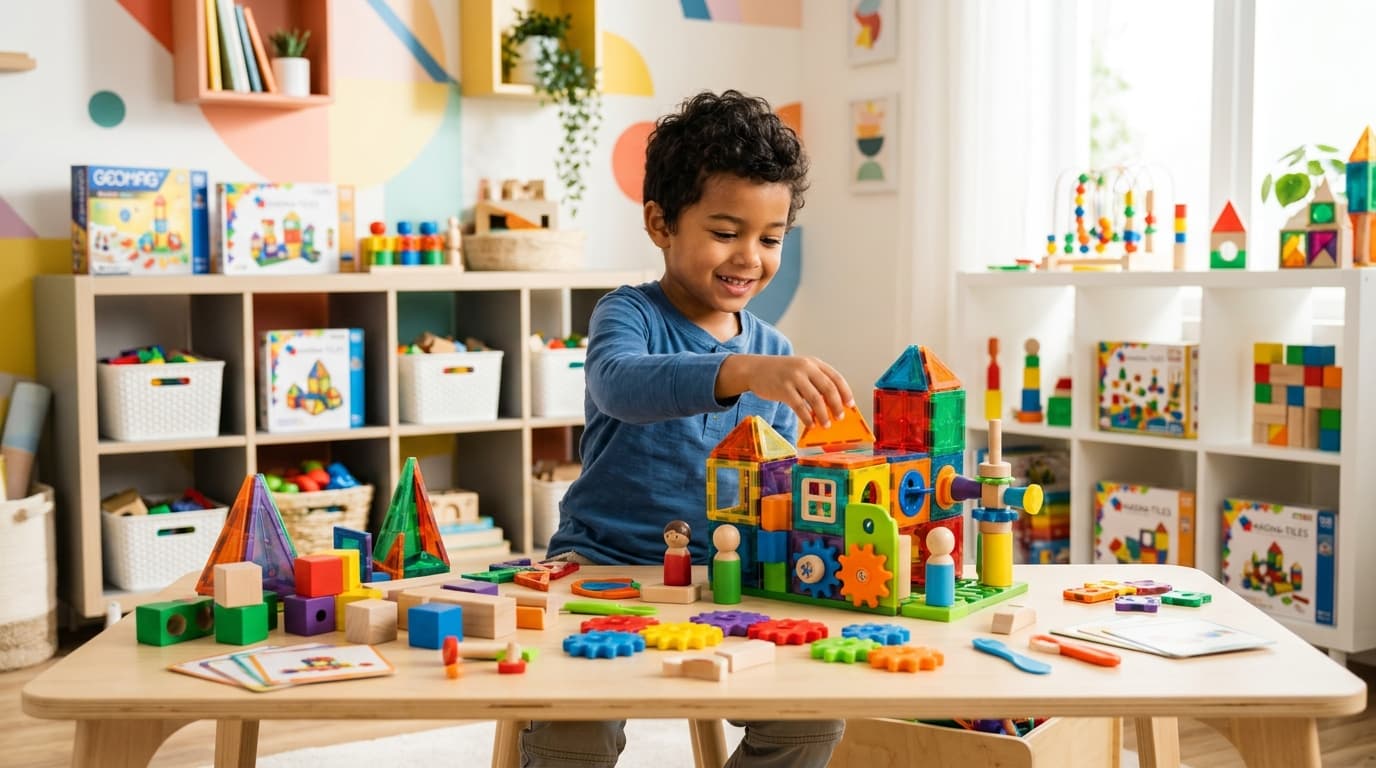
Magnetic Tiles (e.g., Magna-Tiles, PicassoTiles): These vibrant, translucent tiles connect magnetically, allowing children to build 2D and 3D structures with ease. They are fantastic for exploring geometry, symmetry, and architectural design. The instant gratification encourages continuous experimentation and complex designs.
K'nex: With their unique rods and connectors, K'nex sets allow for dynamic and elaborate creations, often including working models with moving parts. They push children to think about mechanics, balance, and structural integrity, fostering patience and persistence.
Art & Sensory Play: Expressing Inner Worlds
Art supplies are the quintessential tools for creative expression, allowing children to communicate ideas, emotions, and observations in a tangible way. Sensory play further enhances this exploration.
Open-Ended Art Supplies: Simple items like crayons, washable paints, markers, and various types of paper are fundamental. Providing a dedicated space and encouraging free exploration without strict rules can unleash incredible artistic potential. Look for non-toxic, child-friendly options readily available at craft stores like Michaels or online.
Modeling Clay and Play-Doh: These tactile materials are excellent for developing fine motor skills and hand-eye coordination. Children can sculpt, mold, and create anything they imagine, transforming a blob of clay into a character or a masterpiece. The sensory experience itself is stimulating and calming, fostering concentration.
Sensory Bins: While not strictly a "toy," a well-curated sensory bin with items like rice, beans, water beads, small toys, and scoops encourages imaginative play, fine motor development, and tactile exploration, often leading to creative storytelling.
Imaginative & Pretend Play: Crafting Narratives and Roles
Pretend play is where imagination truly takes flight. By stepping into different roles and creating narratives, children develop crucial social, emotional, and cognitive skills.
Dress-Up Clothes and Costumes: A simple box of old clothes, scarves, and accessories can transform a child into a superhero, a chef, or an explorer. This encourages imaginative scenarios, identity exploration, and narrative creation.
Dollhouses and Play Kitchens: These classic sets provide miniature worlds for children to populate with characters and stories. Playing house or chef helps children mimic adult roles, understand social dynamics, and develop empathy. Many high-quality wooden options are available from reputable US brands known for durability.
Puppets and Puppet Theaters: Puppets offer a fantastic way for children to develop storytelling skills and vocal expression. They can create characters, dialogues, and entire plays, often overcoming shyness in the process.
Logic, Puzzles & Strategy Games: Sharpening Critical Thought
While often associated with logic, puzzles and certain board games are powerful tools for fostering creative problem-solving and strategic thinking.
Jigsaw Puzzles: Beyond simple picture matching, complex jigsaw puzzles for older children require spatial reasoning, pattern recognition, and persistence. The satisfaction of completing a challenging puzzle reinforces a growth mindset.
Logic Games (e.g., ThinkFun's Rush Hour, Gravity Maze): These games present specific challenges that require children to devise unique solutions. They teach deductive reasoning, critical thinking, and planning, often with multiple ways to reach a successful outcome.
Strategic Board Games: Games like Ticket to Ride: First Journey or Catan Junior introduce children to strategy, resource management, and anticipating opponents' moves. These games encourage creative tactics and adapting plans, fostering a dynamic approach to problem-solving.
STEM & Future Skills: Innovating for Tomorrow
For the digitally native generation, STEM (Science, Technology, Engineering, and Mathematics) toys are increasingly vital for nurturing creative thinking in a modern context.
Entry-Level Robotics Kits (e.g., Sphero indi, LEGO Education SPIKE Essential): These kits allow children to build and program simple robots, introducing them to coding concepts, mechanics, and problem-solving through hands-on experimentation. They encourage iterative design and debugging, essential creative processes. You can find these at electronics retailers like Best Buy or specialty toy stores across the US.
Coding Games and Kits (e.g., Osmo Coding, Code & Go Robot Mouse): These interactive systems make learning to code fun and accessible. Children use physical blocks or on-screen commands to guide characters or robots, developing computational thinking, sequencing, and logical reasoning. They learn to break down complex problems into smaller, manageable steps – a fundamental creative skill.
Choosing the Right Toy for Your Child
When selecting toys, consider your child's age, developmental stage, and individual interests. Prioritize open-ended toys that allow for multiple uses and encourage imaginative exploration over highly structured ones. Look for durability and safety, ensuring products meet US safety standards. The best educational toy is one that sparks joy, curiosity, and a desire to learn and create.
Conclusion: Nurturing the Next Generation of Innovators
Investing in educational toys that foster creative thinking is one of the best gifts you can give a child. From the foundational joy of building and expressing through art, to the intricate narratives of pretend play and the logical challenges of STEM kits, each category offers unique pathways to intellectual growth. By providing the right tools and a supportive environment, you're not just buying a toy; you're nurturing a curious mind, cultivating a lifelong love for learning, and empowering the next generation of innovators, artists, and problem-solvers. Let's encourage our children to imagine, create, and explore the limitless possibilities of their own minds.
Related Articles
Explore more articles you might like